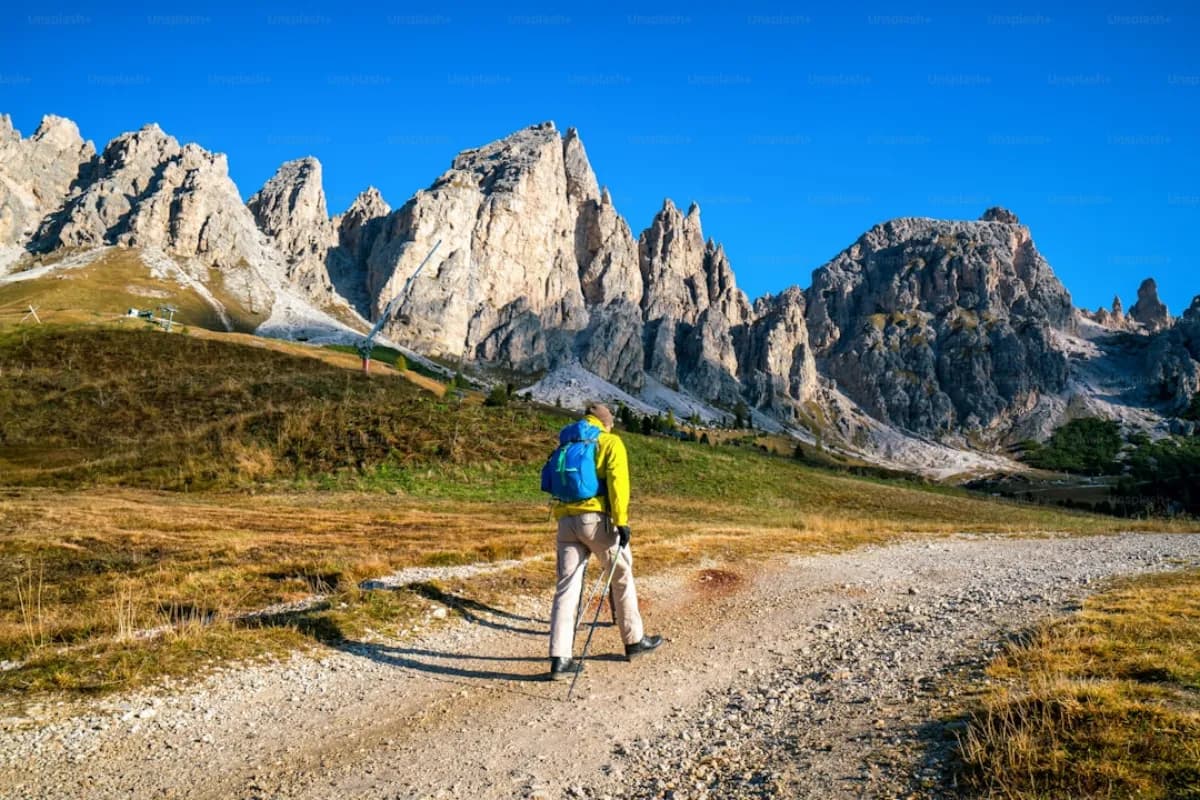
San Vigilio di Marebbe is a privileged starting point for some of the finest hikes in the Dolomites. Nestled between the Fanes-Senes-Braies Nature Park and the Plan de Corones ski area, this small Ladin gem offers direct access to trails ranging from easy panoramic walks to demanding high-altitude treks.
We have selected the 4 best hikes reachable from San Vigilio, with all the practical information you need to plan your day in the mountains. And if you want to add a dose of adrenaline to your holiday, our zipline is the perfect complement.
1. Sass de Putia (Piz de Putia)
One of the most iconic peaks of the Dolomites, between Val di Funes and Val Badia.
- Difficulty: demanding (experienced hikers)
- Trailhead: Passo delle Erbe
Sass de Putia is one of the most iconic peaks of the northern Dolomites. Its unmistakable shape dominates the landscape. The ascent starts from Passo delle Erbe and becomes steeper and rockier in the final section.
From the summit, the panorama over the Dolomites and the surrounding Alps is extraordinary. This hike demands good fitness and a sure foot, but it rewards every single step.
Start early in the morning to avoid the summer afternoon thunderstorms that are frequent at altitude. Always check the weather forecast before setting out and bring appropriate clothing for rapid changes in conditions.
2. Rifugio Fanes
The classic hike into the heart of Fanes-Senes-Braies Nature Park.
- Difficulty: moderate (regular hikers)
- Trailhead: Pederü (about 25 minutes by car from San Vigilio along 12 km of toll road, or by bus 462)
The hike to Rifugio Fanes is one of the classic routes in the area. Starting from Pederü, it climbs through conifer forests and alpine pastures to reach the Fanes plateau, one of the most evocative landscapes in the Dolomites.
The refuge sits in a spectacular position, surrounded by Dolomite walls and small alpine lakes. It is the ideal spot for a lunch with a view before heading back down. For those with more time, it is possible to continue to Lago di Limo or Rifugio Lavarella.
Combine Your Hike with the Zipline3. Sas dla Crusc — Santa Croce
One of the most rewarding hikes in the Dolomites, with the celebrated refuge as a waypoint.
- Difficulty: hard (experienced hikers)
- Trailhead: La Val, in Val Badia
Sas dla Crusc, or Heiligkreuzkofel, is one of the most impressive mountains in Val Badia. The classic hike includes a stop at Rifugio Santa Croce, reached on a well-marked trail.
From the refuge, more experienced hikers can continue to the summit on a route requiring a sure foot and a head for heights. The view from the top takes in much of Val Badia and the surrounding Dolomites.
For those who prefer a gentler outing, the trail to the refuge alone is already magnificent, with the chance to stop for a meal.
4. Plan de Corones (2,275 m)
The signature mountain of Val Pusteria, home to the Messner Mountain Museum.
- Difficulty: easy to moderate
- Trailhead: San Vigilio (lifts) or various walking trails
Plan de Corones is reachable from San Vigilio by lift, or on foot for those who prefer to earn the view with their own legs. At the top stands the Messner Mountain Museum Corones, designed by Zaha Hadid and dedicated to traditional mountaineering.
The panorama from the summit is 360 degrees over the Dolomites and the surrounding Alps. In winter, Plan de Corones is one of South Tyrol's most famous ski areas; in summer, it becomes a paradise for hikers and bikers.
The summer lifts have their own timetables and opening periods: check the official website before setting out.
Practical Hiking Tips
What to Bring
- Hiking boots with non-slip soles (not trainers!)
- Waterproof and windproof jacket
- High-factor sunscreen and sunglasses
- At least 1.5 litres of water per person
- Energy snacks (nuts, bars)
- Trekking poles (recommended for descents)
Best Time
High-altitude hikes are feasible from mid-June to late September. In June there may still be snow on the higher passes. July and August offer the best conditions but also the most crowds. September is often the ideal month: clear skies, pleasant temperatures and fewer visitors.
Safety
- Always check the weather forecast before setting out
- Tell someone your planned route
- Do not underestimate the stated timings
- In the event of a thunderstorm, descend immediately
Also Read
- Complete Guide to San Vigilio di Marebbe — Everything about the perfect base for hiking.
- Best Adventures in the Dolomites — Zipline, via ferrata, MTB and more.
- Summer in the Dolomites: Adventure Guide — The complete guide to the summer season.
