If there is one product that captures the soul of South Tyrol in a single bite, it is speck. Smoked and cured among the mountains, this centuries-old cured ham is far more than simple charcuterie — it is a piece of Alpine culture. In this guide, we take you on a journey through Speck Alto Adige IGP, from its history to tasting tips and the best places to buy it near San Vigilio di Marebbe.
The History of Speck
Speck production in South Tyrol dates back to the 13th century. Born from the need to preserve meat through the long winter months, speck has evolved into a refined gastronomic art that blends two traditions: Northern European smoking and Mediterranean air-curing.
The word "speck" comes from Middle High German and simply means "fat" or "lard". But over time, the product has transformed into something far more complex and prized.
In 1996, Speck Alto Adige received the PGI (Protected Geographical Indication) mark from the European Union, safeguarding the quality and authenticity of the product. Only speck produced in South Tyrol according to the official specifications may carry this label.
How It Is Made
Speck production follows a five-stage process lasting at least 22 weeks — a timeline that cannot be shortened without compromising quality.
1. Meat Selection
Lean, high-quality pork legs are carefully selected. The meat comes from controlled farms that guarantee high standards of animal welfare.
2. Salting and Seasoning
The legs are salted with a blend of salt, pepper, garlic, juniper, rosemary, bay leaf and other spices. Every producer jealously guards their own recipe — the exact combination of spices is the true secret of each speck.
3. Smoking
After salting, the speck is cold-smoked (never above 20 degrees Celsius) using beechwood, sometimes mixed with juniper. The smoking lasts several weeks and happens in intervals: periods of smoke alternated with periods of rest. This slow process gives speck its characteristic delicate aroma.
The golden rule of South Tyrolean speck is summed up in the formula "a little salt, a little smoke and plenty of fresh air". Unlike other smoked products across Europe, here the smoking is light and subtle — it is the mountain air that does the most important work.
4. Air Curing
This is the longest and most crucial stage. The speck is hung in ventilated rooms where the fresh, dry mountain air slowly dries it for at least 5 months. During this period, the meat loses roughly a third of its weight, concentrating flavours and aromas.
5. Quality Control
Every piece is checked by the Speck Alto Adige Consortium. Only those that pass rigorous quality tests receive the PGI mark.
Where to Buy Speck Near San Vigilio
The San Vigilio di Marebbe area and the Val Badia valley offer several opportunities to purchase top-quality speck.
Butchers and Local Shops
Traditional butchers (Metzgerei in German) are the best place to buy artisanal speck. Here you can taste before you buy and receive advice from master butchers who know every producer in the area.
In San Vigilio and the surrounding villages, you will find shops selling speck produced by local mountain farms — a niche product rarely found outside the valley.
Farmers' Markets
During the summer season, several weekly markets in the Val Badia offer speck directly from producers. It is the perfect opportunity to speak with those who make it and learn the story behind each piece.
Alpine Huts and Refuges
Many mountain huts produce their own speck using ancestral methods. A hike around San Vigilio can also become a gastronomic journey: stop at a hut for a speck platter with Dolomite views.
How to Taste Speck
Speck is enjoyed in different ways, each capable of highlighting different nuances.
The Cut
The cut is fundamental. Speck should be sliced paper-thin — almost transparent — to appreciate the delicate texture and the perfect balance between lean meat and fat. Use a well-sharpened knife and always cut against the grain.
For optimal tasting, remove the speck from the refrigerator at least 30 minutes before serving. At room temperature the flavours express themselves fully: you will notice notes of nutmeg, juniper and that subtle smoky finish that makes speck unique.
The Perfect Platter
A traditional South Tyrolean speck platter includes:
- Thinly sliced speck — the star of the show
- Rye bread (Schuttelbrot) — the traditional crispy flatbread
- Local cheeses — Graukase (grey cheese), Almkase (alpine cheese)
- Sauerkraut or pickled gherkins
- Kren (grated horseradish) — the spicy finishing touch
Wine Pairings
Speck pairs beautifully with South Tyrolean wines:
- Gewurztraminer: the classic pairing — the aromatic notes of the wine enhance the spices in the speck
- Pinot Bianco: fresh and mineral, perfect for balancing the smokiness
- Lagrein: the indigenous South Tyrolean red, ideal with more aged speck
- Schiava: light and fruity, perfect for an aperitif with speck
- Muller Thurgau: fresh and floral, excellent in summer
For beer lovers, South Tyrolean craft beers — particularly Weizen and Lager styles — make an excellent pairing.
Speck in the Kitchen
Beyond tasting it raw, speck is a versatile cooking ingredient:
- Canederli with speck: the iconic South Tyrolean dish — bread dumplings with speck
- Speck risotto: creamy and flavourful
- Speck and apples: the most typical sweet-savoury pairing of the region
- Tyrolean salad: with crispy speck, eggs and potatoes
- Flammkuchen: Alsatian-style pizza with speck and onion
Speck as a Souvenir
Speck is the perfect foodie souvenir to bring home from the Dolomites. Some tips for transport:
- Whole or half: keeps longer (up to 6 months refrigerated)
- Vacuum-packed: ask the seller to vacuum-pack it for your journey
- Sliced and vacuum-packed: keeps for 2-3 weeks refrigerated
- By plane: vacuum-packed speck can be carried in hand luggage within the EU
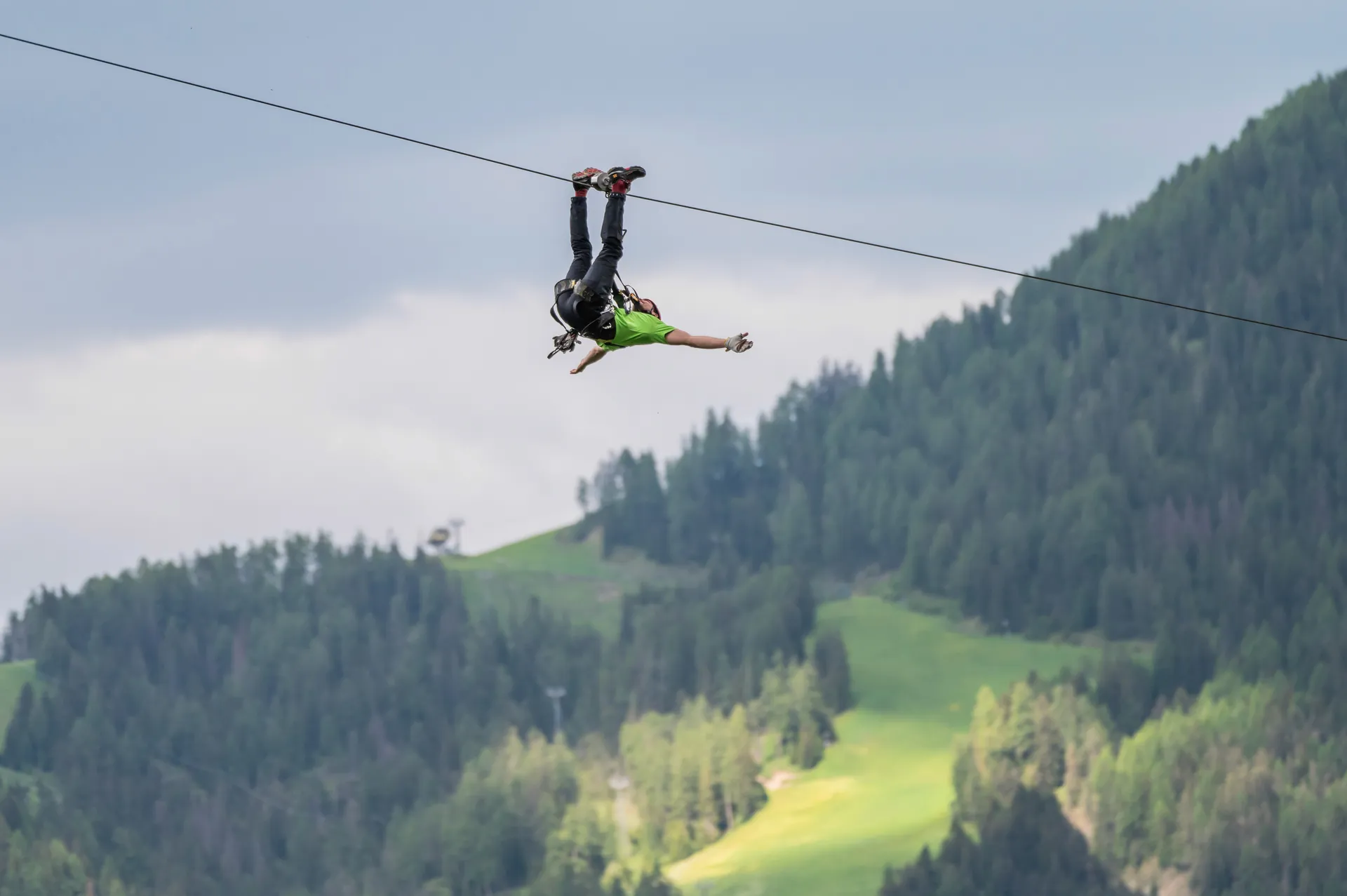
After the adrenaline of our zipline across the Dolomites, a speck platter with a panoramic view is the perfect way to end the day.
Book the Zipline, Then Stop for a Speck PlatterSpeck Events and Festivals
South Tyrol celebrates its most iconic product with several events:
- Speckfest in Villnoess/Val di Funes (autumn): the most famous speck festival, with tastings, music and producers
- Christmas markets: speck takes centre stage at markets across the region
- Alpine festivals (Almfeste): in summer, when livestock descends from the high pastures, celebrations feature speck and traditional music
These festivals are an excellent opportunity to experience Dolomite culture and traditions in an authentic way.
Plan Your Gourmet Holiday: Contact UsRead Also
- Alpine Cuisine of the Dolomites — All the traditional dishes to try.
- Complete Guide to San Vigilio di Marebbe — Everything about the destination.
- 3-Day Dolomites Itinerary — The perfect programme for a long weekend.