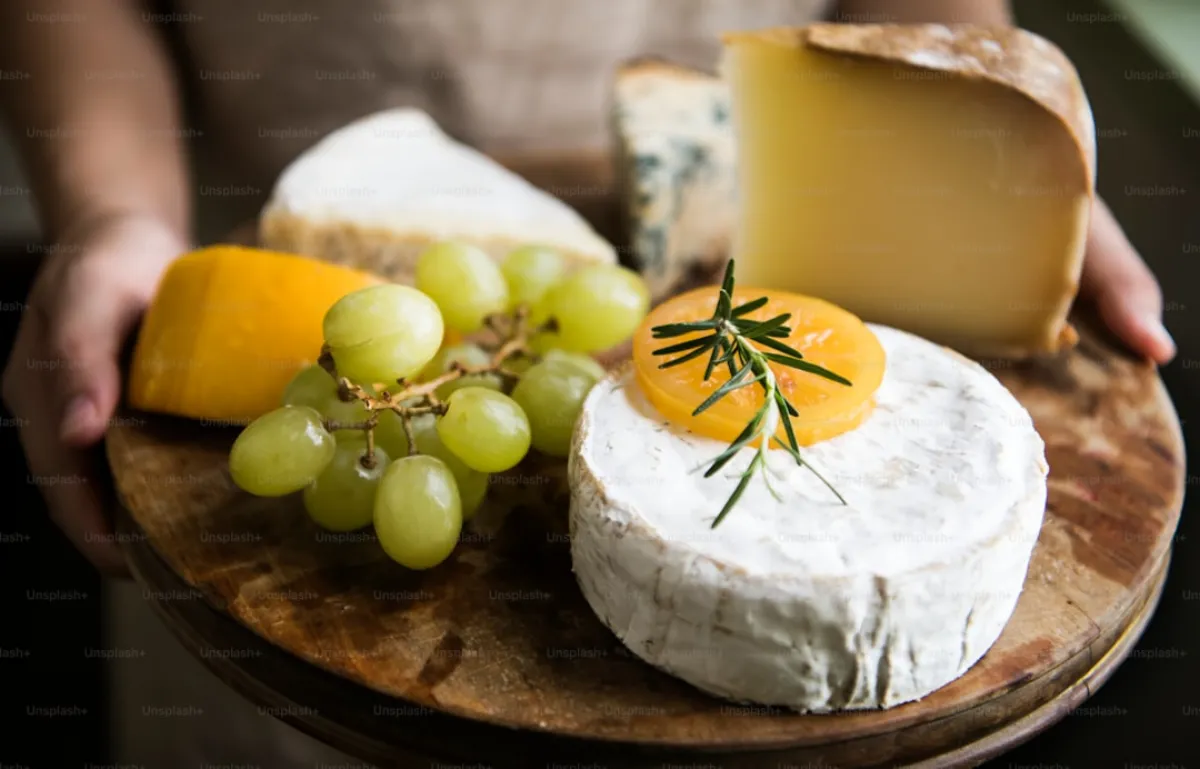
If speck is the king of the South Tyrolean table, cheese is its queen. The Dolomites boast a cheese-making tradition rooted in centuries of alpine life, when every mountain hut produced its own cheese from the milk of cows grazing between 1,500 and 2,500 metres. Today, this heritage is more alive than ever — and San Vigilio di Marebbe is the perfect starting point for a journey into the most authentic mountain flavours.
In this guide, we take you through alpine farms, dairies and markets to taste the cheeses that tell the story of these valleys.
The Must-Try Cheeses
Graukase — Grey Cheese
Graukase is the most distinctive cheese in the Dolomites and perhaps the most divisive: you either love it or you hate it, but you cannot ignore it. Produced exclusively in South Tyrol, this lean cheese has a greyish appearance (hence the name) and an intense, almost piquant flavour that develops with ageing.
What makes Graukase unique is that it is produced without rennet, using only naturally acidified skimmed milk. It is a farmhouse cheese born from the need to waste nothing: after extracting butter from the milk, this unique cheese was made from the remaining buttermilk.
The traditional way to enjoy it is with raw onion, seed oil and vinegar — the famous Graukase salad, a dish you will find at every mountain hut in the area.
Graukase has an extremely low fat content (less than 2%), making it one of the leanest cheeses in Europe. But do not be fooled: its flavour is anything but delicate. During ageing, it develops intense aromatic compounds that make it a complete sensory experience — locals affectionately call it "the cheese that stinks".
Almkase — Alpine Cheese
Almkase is the cheese that best represents alpine tradition. Produced in high-altitude huts during the summer months (June to September), when cows graze freely on alpine meadows, it has a rich, complex flavour that changes from hut to hut, from year to year.
The secret of Almkase lies in what the cows eat: mountain herbs, alpine flowers and spring water give the milk — and therefore the cheese — aromatic nuances impossible to replicate at lower altitudes. Each wheel tells the story of a season, a pasture and a skilled hand.
Puzzone di Moena DOP
The name says it all: Puzzone di Moena translates roughly as "the big stinker from Moena". It is a washed-rind cheese with a decidedly assertive aroma, to put it mildly. But beneath that orange rind lies a soft, buttery paste with a surprisingly balanced flavour — sweet, with notes of grass and hazelnut.
Produced in the Val di Fassa and surrounding valleys, Puzzone received its DOP (Protected Designation of Origin) status in 2014. The rind is regularly washed during ageing with warm water, a process that develops the bacteria responsible for its characteristic (and powerful) scent.
For first-time Puzzone tasters, the advice is to try it at room temperature and focus on the flavour, not the smell. Pair it with mountain honey and rye bread: the sweetness of the honey perfectly balances the intensity of the cheese, creating a combination that will make you forget any olfactory reservations.
Stelvio DOP
Stelvio is the best-known South Tyrolean cheese outside the region. Semi-cooked with a semi-hard paste and a minimum ageing of 60 days, it has a sweet, delicate flavour with notes of fresh milk and butter. It is the perfect cheese for those seeking a gentler approach to Dolomite flavours.
Zieger — Mountain Ricotta
Zieger is the South Tyrolean version of ricotta, made from the whey left over from cheese production. It has a fresh, delicate, slightly acidic flavour. It is used fresh as an ingredient in many traditional dishes or aged, when it develops a stronger flavour and a grate-able texture.
Where to Buy Cheese
Alpine Farms and Dairies
The best way to discover Dolomite cheeses is to visit the farms directly. In the San Vigilio di Marebbe and Val Badia area, several farms open their doors to visitors during the summer months. You can watch the cheese-making process, speak with the farmers and buy products fresh from production.
A hike to the mountain huts becomes an opportunity to stop at a farm and take home a piece of Almkase wrapped in paper — the tastiest souvenir you can imagine.
Bruneck Market
The weekly market in Bruneck (every Wednesday) is cheese heaven. Local producers bring their finest wheels: you can taste, compare and get advice. Here you will also find rare cheeses from small dairies with limited distribution.
Speciality Shops
In every village in the Val Badia you will find speciality shops where cheeses take centre stage. The shopkeepers know every producer personally and will guide you to the perfect cheese for your palate.
Perfect Pairings
Dolomite cheeses are at their best when paired with local products:
With Wine
- Graukase + Gewurztraminer: the wine's aromatics balance the cheese's intensity
- Aged Almkase + Lagrein Riserva: two strong characters that complement each other
- Puzzone + Pinot Bianco: the wine's freshness cleanses the palate
- Stelvio + Muller Thurgau: a sweet, delicate pairing
South Tyrolean wines are the natural companions to these cheeses — same mountains, same terroir.
With Speck
The cheese-speck combination is a timeless classic of the South Tyrolean table. A board with Almkase, Stelvio, thinly sliced speck, rye bread (Schuttelbrot) and a few walnuts is the perfect refuge lunch after a morning of adventure.
With Honey
Mountain honey — especially rhododendron honey, typical of the Dolomites — is the ideal accompaniment for the more intense cheeses. Try Puzzone with rhododendron honey: it is a revelation.
Dairy Visits
Several establishments in the area offer guided tours of cheese production:
- Bruneck Dairy: the largest in the area, with guided tours and tastings
- Val di Funes alpine farms: traditional Graukase production at altitude
- Vandoies Dairy: small artisanal dairy with award-winning Almkase
These visits are an educational and gastronomic experience that enriches any Dolomite holiday.
Cheese in Ladin Culture
For the Ladin people, who have inhabited these valleys for millennia, cheese is not just food — it is identity. Cheese-making is an integral part of the annual cycle of alpine life: the summer pasture season, production at the mountain hut, winter ageing.
Many traditional Ladin recipes revolve around cheese: cheese dumplings (Kasknodel), stuffed pasta (Crafuncins), cheese fritters — simple dishes that transform few ingredients into masterpieces of flavour.
After a day among farms and dairies, what better way to digest than a shot of adrenaline? Our Dolomites zipline is the perfect way to cap a gourmet day with a breathtaking flight.
Book the Zipline After Your TastingTaking Cheese Home
If you want to bring Dolomite cheeses home as souvenirs:
- Hard cheeses (aged Almkase, Stelvio): easy to transport and last weeks
- Soft cheeses (Puzzone): ask for vacuum packaging
- Graukase: keeps well for 1-2 weeks in the fridge
- By air: vacuum-packed cheeses can be carried in hand luggage within the EU
Read Also
- South Tyrol Speck: A Tasting Guide — The other great star of the South Tyrolean table.
- Alpine Cuisine of the Dolomites — Every traditional dish to try.
- South Tyrol Wines: A Tasting Guide — The perfect wines to pair with cheese.